
Soccer is a game of inches, and nowhere is this truer than in passing. A single misplaced pass can break down an attack, cost a goal, or even lose a match. Yet, despite its importance, most players never dedicate focused time to improving their soccer passing accuracy. The result? Teams that struggle to maintain possession, create chances, or execute under pressure.
I’ve coached players from youth leagues to semi-professional teams, and the difference between those who excel and those who plateau often comes down to one thing: the ability to deliver accurate, intentional passes. This guide isn’t about flashy tricks or long-range bombs. It’s about the fundamentals of passing—technique, decision-making, and repetition—that transform a good player into a playmaker.
You’ll learn how to train your body and mind for precision, practice drills that replicate game situations, and develop the vision to see passes before they happen. By the end, you’ll have a blueprint to elevate your passing accuracy and become the player your team relies on.
The Science of Soccer Passing Accuracy: What Makes a Pass Perfect
The Biomechanics of a Precise Pass
Passing accuracy isn’t just about aim—it’s about physics. A well-struck ball follows a predictable path based on:
- Contact Point: Hitting the ball with the inside of your foot (the “sweet spot”) maximizes control.
- Body Position: Your hips and shoulders should face your target, with your non-kicking foot planted beside the ball.
- Follow-Through: Your kicking foot should continue toward the target after contact, ensuring the ball goes where you intend.
A study from the Journal of Sports Sciences found that elite players strike the ball with 20% more consistency in these areas than amateurs. The difference? Repetition and intentional practice.
The Role of Vision and Anticipation
Great passers don’t just see their teammates—they see the field. They anticipate where players will move and deliver the ball before the defender reacts. This “soccer IQ” is what separates players like Xavi and Andrea Pirlo from the rest.
Example: Watch how Kevin De Bruyne scans the field before receiving the ball. He’s already decided where the pass will go before the ball reaches his feet.
The Pressure Paradox: Why Accuracy Drops in Games
Players often practice passing in static drills, only to struggle in matches. Why? Pressure alters your brain’s motor control. A 2023 study from Neuropsychologia showed that stress reduces passing accuracy by up to 25% in untrained players. The solution? Train under game-like conditions to build resilience.
The Two Types of Passing Accuracy
- Short Passing (0-20 yards): Requires soft touch and quick decision-making. Think of Luka Modrić’s one-touch passes.
- Long Passing (20+ yards): Demands power and precision. Toni Kroos is the master of this skill.
Both require different techniques but share the same foundation: control and intention.
How to Improve Passing Accuracy in Soccer: A Step-by-Step Training Plan
Step 1: Master the Basic Passing Technique
Before you can pass under pressure, you need to perfect the fundamentals. Focus on:
- Foot Placement: Use the inside of your foot, just above the arch.
- Body Alignment: Face your target with your hips and shoulders square.
- Contact: Strike the middle of the ball for ground passes; the lower half for lofted passes.
- Follow-Through: Your kicking foot should end pointing at your target.
Pro tip: Practice against a wall to develop muscle memory. Aim for the same spot every time.
Step 2: Train Your Non-Kicking Foot
Your non-kicking foot is your balance and direction guide. Plant it beside the ball, pointing at your target. A stable base ensures a clean strike.
Example: Watch Sergio Busquets—his non-kicking foot is always perfectly placed, allowing him to pass with pinpoint accuracy.
Step 3: Develop Your First Touch
A great pass starts with a great first touch. If you’re struggling to control the ball before passing, your accuracy will suffer. Practice:
- Cushioning: Absorb the ball’s momentum with a soft touch.
- Redirecting: Use your first touch to set up your pass.
Drill: Have a partner pass to you while you’re moving. Control the ball and pass it back in one fluid motion.
Step 4: Practice Under Game-Like Pressure
Static passing drills won’t cut it. To improve soccer passing accuracy, simulate game conditions:
- Add Defenders: Start with passive pressure, then progress to full defensive pressure.
- Time Constraints: Limit yourself to 2-3 touches before passing.
- Fatigue Drills: Pass while tired to mimic late-game scenarios.
Example: Set up a 3v1 keep-away drill. The goal is to complete 10 passes before the defender intercepts.
Step 5: Develop Your Soccer Vision
Seeing the pass before it happens is a skill you can train. Use these football passing drills to sharpen your awareness:
- Scanning: Lift your head every 2-3 seconds to assess the field.
- Predicting Movement: Anticipate where teammates will be, not where they are.
- Peripheral Vision: Practice passing without looking directly at your target.
Drill: Play “blind soccer” where you pass without looking at the receiver, relying on spatial awareness.
Step 6: Work on Weight and Trajectory
A perfect pass isn’t just about direction—it’s about speed and height. Practice:
- Ground Passes: Keep the ball low and fast for short distances.
- Lofted Passes: Use the instep to lift the ball for longer distances.
- Driven Passes: Strike through the ball for power passes.
Pro tip: Use cones to practice passing through “gates” at varying heights and speeds.
Step 7: Train Both Feet Equally
One-footed players are predictable and limited. Dedicate time to passing with your weaker foot. Start with short, simple passes and gradually increase difficulty.
Example: Phil Foden is ambidextrous with his passing, making him unpredictable and versatile.
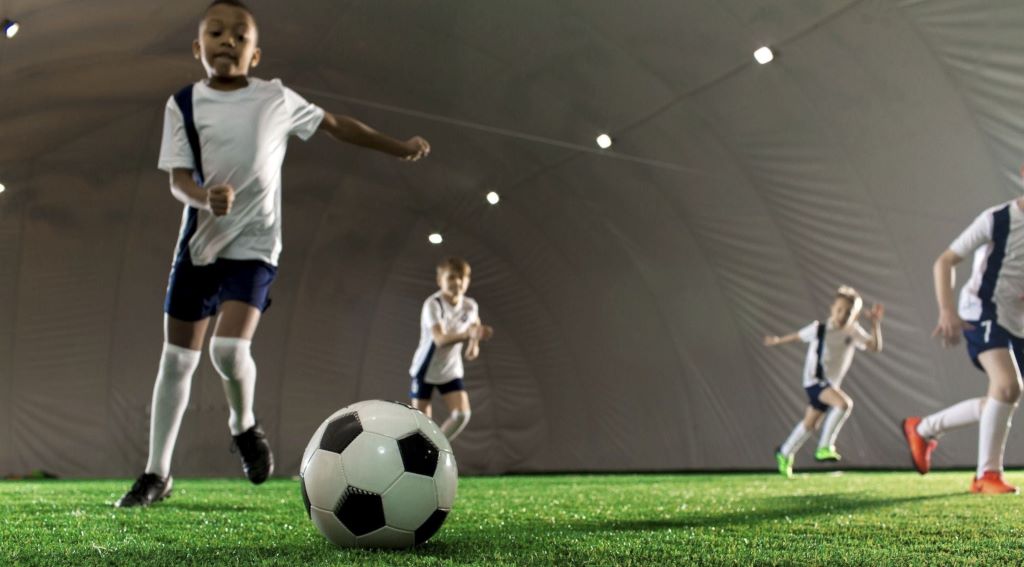
Soccer Skills: Advanced Techniques for Pinpoint Passing
Tip 1: Use the “Push Pass” for Short Distances
The push pass is the most accurate for short ranges. Use the inside of your foot to “push” the ball to your teammate. Keep your ankle locked and follow through toward the target.
Tip 2: Master the “Driven Pass” for Long Distances
For longer passes, use the laces of your foot to drive the ball. Lean slightly back and strike through the ball’s center. This technique is ideal for switching fields or breaking defensive lines.
Example: Toni Kroos uses driven passes to split defenses and create scoring opportunities.
Tip 3: Practice One-Touch Passing
One-touch passing is essential for maintaining possession under pressure. Train with a partner to pass and receive without stopping the ball. Focus on:
- Anticipation: Know where the ball is going before it arrives.
- Body Shape: Open your hips to receive and pass in one motion.
Drill: Set up a triangle passing drill with three players. The goal is to complete 20 one-touch passes without stopping.
Tip 4: Use Your Body to Shield the Ball
In tight spaces, use your body to protect the ball while preparing to pass. Turn your shoulders to block defenders and create space for a clean strike.
Tip 5: Vary Your Passing Speeds
A well-timed pass is often more effective than a perfectly placed one. Practice:
- Slow Passes: For teammates to control and dribble.
- Fast Passes: To break defensive lines or catch opponents off guard.
- Delayed Passes: Wait a beat to let defenders commit before passing.
Tip 6: Improve Your Spatial Awareness
Understanding where your teammates and opponents are is crucial. Play small-sided games (3v3, 4v4) to develop a sense of space and timing.
Tip 7: Watch and Learn From the Pros
Study how elite players like Joshua Kimmich or Thiago Alcântara pass under pressure. Notice their body position, decision-making, and technique.
Football Passing Drills: Train Like the Pros
A) Drill: The Wall Pass Challenge
- Setup: Stand 10-15 yards from a wall.
- Execution: Pass the ball against the wall and control the rebound. Focus on accuracy and first touch.
- Progression: Increase distance or use your weaker foot.
B) Drill: The Triangle Passing Drill
- Setup: Three players form a triangle 10-15 yards apart.
- Execution: Pass the ball in sequence, focusing on one-touch play and movement.
- Progression: Add a defender to apply pressure.
C) Drill: The Long-Range Target Drill
- Setup: Place cones or targets 20-30 yards away.
- Execution: Practice driven passes to hit the targets. Compete with a partner for accuracy.
- Progression: Increase distance or add movement before passing.
D) Drill: The Pressure Passing Grid
- Setup: Create a 10×10 yard grid with 4-5 players.
- Execution: Pass the ball while a defender tries to intercept. Focus on quick, accurate passes.
- Progression: Reduce the grid size or add a second defender.
E) Drill: The Vision Cone Drill
- Setup: Place cones in a zigzag pattern. Have a teammate move between them.
- Execution: Pass to your teammate as they weave through the cones. Focus on anticipating their movement.
- Progression: Increase the speed of the drill or add a second passer.
Common Mistakes That Ruin Passing Accuracy
1. Looking Down at the Ball
Your head should be up, scanning the field. Looking down disrupts your balance and vision.
2. Poor Body Position
Facing the wrong direction or standing off-balance throws off your pass. Always square your hips to your target.
3. Overcomplicating the Pass
Simple passes are often the most effective. Don’t force a fancy pass when a basic one will do.
4. Ignoring the Receiver’s Movement
Pass to where your teammate will be, not where they are. Anticipate their run.
5. Using the Wrong Part of Your Foot
The inside of your foot is for accuracy; the laces are for power. Using the wrong part leads to misplaced passes.
6. Rushing the Pass
Take a breath and focus on your technique. A hurried pass is often an inaccurate one.
7. Neglecting Your Weaker Foot
A one-footed passer is easy to defend. Train both feet equally to become unpredictable.
Expert Insights: How to Develop a Playmaker’s Mindset
Insight 1: Think Two Plays Ahead
Great passers don’t just see the current play—they anticipate the next one. Ask yourself:
- Where will my teammate be in 3 seconds?
- How will the defender react?
- What’s the best pass to set up the next play?
Insight 2: Use Your Body to Deceive Defenders
A slight shoulder drop or body feint can open up passing lanes. Practice “selling” fake movements to create space.
Example: Lionel Messi often looks one way before passing another, confusing defenders.
Insight 3: Communicate With Your Teammates
Verbal and non-verbal cues improve passing accuracy. Call out names, point to where you want the ball, or use hand signals.
Insight 4: Play With Your Head Up
The best passers scan the field constantly. Develop the habit of lifting your head every few seconds, even in practice.
Insight 5: Train Under Fatigue
Passing accuracy drops when you’re tired. Simulate late-game scenarios by practicing passing drills at the end of a grueling session.
Insight 6: Analyze Your Mistakes
After training or games, review your passing:
- Which passes were off-target?
- Were your decisions correct but execution poor?
- Did you misread the field?
Insight 7: Play Small-Sided Games
3v3 or 4v4 games force you to make quick decisions and improve your passing under pressure.
Related Topics:
FAQs: Your Top Questions About Soccer Passing Accuracy
1. How long does it take to improve passing accuracy?
With consistent practice (3-4 times per week), most players see noticeable improvement in 4-6 weeks. Elite levels take years of focused training.
2. What’s the best drill to practice passing alone?
The wall pass drill is ideal for solo practice. Focus on technique and controlling the rebound.
3. How do I pass accurately under pressure?
Train in game-like scenarios with defenders. Start with low pressure and gradually increase intensity.
4. Should I always use the inside of my foot?
For short, accurate passes, yes. For long or driven passes, use the laces of your foot.
5. How can I improve my weaker foot?
Dedicate 10-15 minutes of each practice to passing with your weaker foot. Start with simple drills and progress to game-like scenarios.
6. What’s the secret to one-touch passing?
Anticipation and body shape. Know where the ball is going before it arrives, and position your body to pass in one motion.
7. How do I choose between a ground pass and a lofted pass?
Ground passes are best for short distances and maintaining possession. Lofted passes are useful for long distances or bypassing defenders.
Conclusion: Become the Playmaker Your Team Needs
Improving your soccer passing accuracy isn’t about overnight success—it’s about deliberate, consistent practice. By mastering the fundamentals, training under game-like conditions, and developing your soccer IQ, you’ll transform from a good passer to a playmaker who dictates the game.
Remember: Every pass is an opportunity to create something special. The players who stand out aren’t the ones who never make mistakes—they’re the ones who learn from them and keep improving.
Your next step? Pick one drill from this guide and practice it three times this week. Focus on quality over quantity, and watch your passing accuracy soar.
Ready to Elevate Your Game?
Grab a ball, find a partner or a wall, and start practicing today. The field is waiting, and your teammates are counting on you.
Your journey to pinpoint passing starts now.