
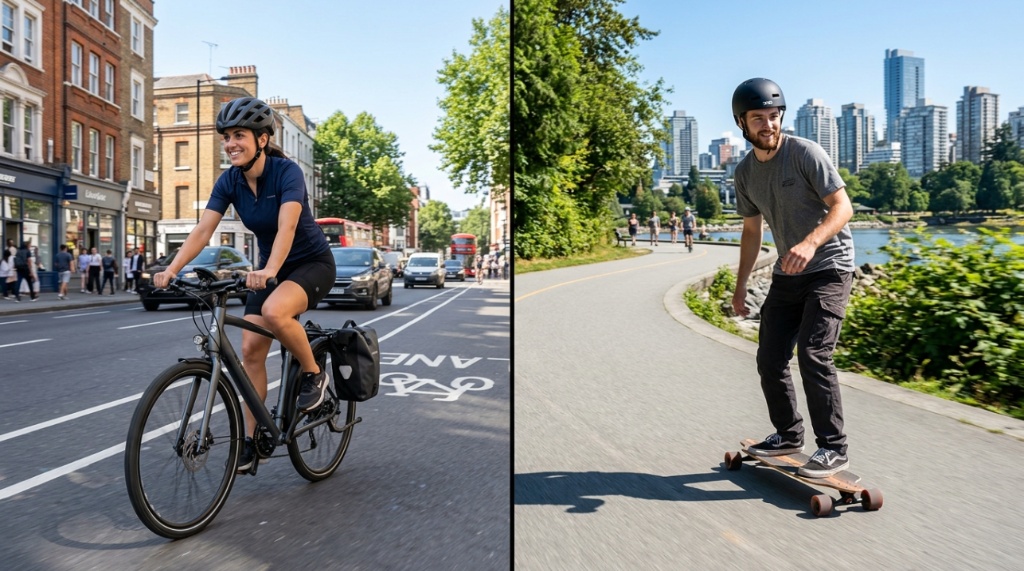
You just bought a new board or a commuter bike, and now you need a helmet that won’t break the bank. But with dozens of cheap options online, how do you know which one will actually protect your head? The truth is, a low price doesn’t have to mean low safety. This guide will walk you through exactly what to look for when searching for affordable skate helmets everyday riding, helping you balance protection, comfort, and cost without getting overwhelmed by marketing hype.
What’s the Real Difference Between a Skate Helmet and a Bike Helmet?
A skate helmet uses a hard, smooth ABS outer shell with a thick EPS foam liner designed to withstand multiple impacts. A bike helmet typically has a thinner shell (often in-molded) and is optimized for one major crash at higher speeds. For everyday riding that might involve falling off a skateboard, a curb, or a bike at moderate speed, a multi-impact skate-style helmet is usually safer and more durable.
The main engineering difference lies in impact testing. Skate helmets are certified to withstand multiple hits in the same area (like falling on a half-pipe repeatedly). Bike helmets are tested for a single high-velocity impact. If you’re commuting on a bike but also using your board on weekends, a certified skate helmet gives you better all-round protection. Additionally, skate helmets typically cover more of the back of the head—a critical area for skateboarding falls.
Construction: In-Mold vs. Hard Shell
- Hard Shell (Skate Style): ABS plastic outer shell bonded to an EPS liner. Heavier but more durable. Best for skateboards and trick riding.
- In-Mold (Bike Style): The outer shell is fused into the foam. Lighter and better ventilated. Best for road cycling and high-speed riding.
- Hybrid: Some affordable helmets combine a hard shell front with a thinner back. These can be a good compromise for everyday use.

Why CPSC and ASTM Certifications Matter More Than Price
If a helmet costs $20 but lacks CPSC (bicycle) or ASTM (skateboard) certification, it is essentially a plastic hat. Certification means the helmet has passed independent lab tests for impact absorption, strap strength, and retention system stability. Never buy a helmet that only claims to be “lightweight” or “breathable” without showing a certification sticker inside.
For everyday riding, look for helmets that meet both CPSC 1203 (bike) and ASTM F1492 (skate) standards. Many affordable models now carry dual certification, meaning they are legal for bike lanes and safe for skateparks. This dual rating is your best guarantee that the helmet will protect you whether you’re cruising to work or practicing ollies.
How to Verify Certification
- Look inside the helmet for a sewn-in label.
- Check for the CPSC logo (bicycle standard).
- Check for ASTM F1492 (skateboard standard).
- If you only see “EN 1078” (European standard), it may not meet US requirements for both use cases.
- When in doubt, check the manufacturer’s website for certification details.
Which Helmet Shape Fits Your Riding Style?
Round profiles (skate style) offer more coverage at the back and sides, ideal for falling backward or sideways. Elongated profiles (bike style) are more aerodynamic and provide less rear coverage but are lighter. For everyday riding that includes both skating and cycling, choose a round profile. It will protect your occipital lobe (back of the skull) better during unexpected falls.
Consider how you actually fall. Skateboarders tend to fall backward or sideways off the board. Cyclists tend to fall forward or to the side at speed. A round, low-profile helmet works well for both scenarios because it covers the temporal and occipital areas without sticking out too far forward, which can catch wind on a bike.
How Much Should You Spend on a Reliable Everyday Helmet?
You can find a safe, certified helmet for $25 to $50. Spending more than $70 usually adds features like MIPS (Multi-directional Impact Protection System), better ventilation, or lighter materials, but the core impact protection on a certified $30 helmet is often very similar to a $100 model. Focus on fit and certification first, then consider extra features.
The sweet spot for most riders is between $35 and $45. In this range, you get dual certification, a comfortable retention system (dial fit), decent padding, and a visor. Below $25, you risk poor padding that wears out quickly or questionable certification claims. Above $60, you pay for weight savings and rotational protection technology, which is valuable but not essential for casual everyday riders.
| Price Range | What You Get | Best For |
|---|---|---|
| $15 – $25 | Single certification, basic foam, minimal padding | Occasional use, children’s helmets |
| $25 – $45 | Dual certification, dial fit, decent ventilation | Everyday commuting, skateparks, casual riding |
| $45 – $70 | MIPS or SPIN technology, premium padding, better straps | Serious skaters, daily bike commuters |
For a curated list of models that hit this sweet spot, check out our guide on affordable skate helmets everyday riding, which breaks down top picks by head shape and activity.
How to Get a Perfect Fit Without Trying It On
Measure your head circumference just above your eyebrows using a soft measuring tape. Match this measurement to the manufacturer’s size chart. The helmet should sit level on your head (not tilted back), with the front edge one to two finger-widths above your eyebrows. The straps should form a “V” around your ears, and the chin strap should be snug enough that you can only fit one finger between it and your chin.
Step-by-Step Fit Test
- Shake test: With the helmet strapped, shake your head side to side and up and down. The helmet should move with your skin, not slide independently.
- Roll-off test: Try pushing the helmet forward from the back. It should not roll down over your eyes. Push it backward from the front. It should not expose your forehead.
- Strap check: The side straps should meet just below your earlobe. Buckle the chin strap and open your mouth wide. You should feel the helmet press down on the top of your head.
Can You Use a Kids’ Helmet for Adult Riding?
No, unless you have a very small head that matches the size range. Kids’ helmets are tested with smaller head forms and may not provide adequate coverage or impact absorption for an adult skull. Always buy a helmet sized for your specific head circumference, regardless of age labeling. Many adult women prefer smaller adult sizes (53–55 cm) rather than large kids’ sizes.
The geometry of a kids’ helmet also differs. The foam density and thickness are optimized for the mass of a child’s head. An adult wearing a kids’ helmet in a crash could experience higher G-forces because the foam is not designed to decelerate a heavier mass. Stick with adult sizes for anyone over 12 years old.
What Features Actually Matter for Everyday Use?
Ventilation, weight, and a visor matter most for comfort, but they don’t affect safety certification. A removable, washable liner is a practical feature for daily riders who sweat. A dial-adjustment system at the back (often called a “fit wheel”) is essential for getting a snug fit without pressure points. Avoid helmets that only use foam pads to adjust fit—they compress over time.
Features to Prioritize
- Dial fit system: Allows micro-adjustments while wearing the helmet.
- Removable liner: Washable padding extends the helmet’s life and reduces odor.
- Buckle type: Magnetic or snap buckles are easier to use with one hand than traditional plastic clip buckles.
- Vents: 8 to 12 vents are sufficient for most climates. More vents reduce protection in skate-style falls.
Features You Can Skip
- MIPS on a budget: If you have to choose between MIPS and proper fit, choose proper fit.
- Bluetooth integration: Adds weight, cost, and a failure point.
- Gopro mount: Can compromise the shell integrity in a crash.
How Long Does an Affordable Helmet Last?
Most manufacturers recommend replacing a helmet every three to five years, even if it hasn’t been in a crash. UV rays, sweat, and temperature changes degrade the EPS foam over time. For a budget helmet ($25–$40), consider replacing it every two to three years if you ride daily, as the foam and padding materials are less resilient than premium models.
After any significant impact—even if the shell looks fine—replace the helmet immediately. EPS foam absorbs energy by compressing, and it does not spring back. A helmet that has been dropped from waist height onto concrete should also be inspected carefully. If you see cracks in the foam or spiderwebs on the shell, it’s time for a new one.
Is a Heavier Helmet Safer?
Not necessarily. A heavier helmet often means a thicker hard shell and more foam, which can absorb more energy. However, modern lightweight materials like polycarbonate shells and expanded polystyrene (EPS) foam provide excellent protection at lower weights. The trade-off is that heavier helmets (above 400 grams) can cause neck fatigue during long rides. For everyday use, a helmet between 350g and 400g offers a good balance.
Don’t assume weight equals protection. Some of the safest affordable helmets weigh around 380 grams. Very lightweight helmets (under 300g) might sacrifice shell thickness or foam density. Always check the certification label rather than guessing based on how heavy the box feels.
Choosing a multi-sport helmet is all about balancing versatility and budget. Just like golfers trying to decide between a golf watch and a rangefinder to maximize their game, everyday riders need to weigh whether a skate-style or traditional cycling helmet best fits their daily commute.
How to Clean and Maintain Your Helmet
Clean the outer shell with mild soap and water using a soft cloth. Never use solvents, alcohol, or abrasive cleaners—they can weaken the polystyrene foam and the plastic shell. Remove the inner pads and hand wash them in cool water with gentle detergent. Air dry completely before reinserting. Store your helmet in a cool, dry place away from direct sunlight, car trunks, or garage sheds where temperatures can exceed 140°F (60°C).
Helmets exposed to extreme heat (like in a locked car on a summer day) can suffer structural damage invisible to the naked eye. The glue bonding the foam to the shell can weaken, and the foam itself can begin to break down. If your helmet has been sitting in a hot car for weeks, it’s safer to replace it.
Frequently Asked Questions
Can I wear a skate helmet for cycling?
Yes, if the helmet is certified to CPSC standards (bicycle). Many affordable skate helmets now carry dual certification (CPSC + ASTM), making them legal and safe for both activities. Always check the label inside the helmet.
Do I need MIPS on an affordable helmet?
No, MIPS is a rotational impact protection system that adds $15–$30 to the cost. It offers added protection against angled impacts, but a well-fitted, dual-certified helmet without MIPS is still very safe for everyday riding.
How tight should a new helmet feel?
It should feel snug all around your head without causing pain or pressure points. You should be able to fit one finger between the chin strap and your chin. The helmet should not move when you shake your head.
Can I buy a used helmet to save money?
No. Used helmets may have invisible damage from previous impacts, UV degradation, or improper storage. The EPS foam loses performance over time. Always buy new for head protection.
What’s the best helmet for a round head shape?
Skate-style helmets with a round profile and a dial fit system work best for round head shapes. Avoid bike helmets with elongated shapes, as they can create pressure on the temples and forehead.
Do cheap helmets ruin your hair?
Cheap helmets with non-breathable foam pads and poor ventilation can trap sweat and flatten hair. Look for helmets with moisture-wicking, removable liners and at least 8 vents to minimize hair damage and odor buildup.
When should I replace a budget helmet?
Replace it after any crash, if it shows cracks or dents, or every 2–3 years for daily use. Even without visible damage, the foam degrades from sweat, UV exposure, and temperature changes over time.
Conclusion
Choosing an affordable helmet for everyday riding doesn’t mean sacrificing your safety. Focus on dual CPSC and ASTM certifications first, find a model with a dial-fit system that matches your head shape, and stick to the $25–$45 price range for the best value. Remember that a perfect fit is more important than fancy features like MIPS or Bluetooth and that a $30 helmet with a snug fit will protect you better than a $100 one that wobbles. Measure your head, check the labels, and replace your helmet every few years or after any hard hit. Your brain is worth the simple investment. Get a certified helmet today and ride with confidence, knowing you made a smart, affordable choice for your daily adventures.