

A rash guard is one of the most important pieces of equipment you own as a surfer. It protects your skin from the sun, saltwater, and the friction of your board. However, without proper care, even the best rash guard can fade, stretch, and break down surprisingly fast.
The good news is that keeping your rash guard in great condition does not take much effort. A few simple habits can add years to its life. This guide walks you through everything you need to know, from rinsing after a surf session to storing it correctly at home.
Why Rash Guard Maintenance Matters
Many surfers treat their rash guard as a throwaway item. They wear it, toss it in a bag, and forget about it until the next session. This approach leads to fast deterioration. Salt, sunscreen, and UV exposure all break down fabric over time.
Replacing rash guards frequently costs money. Additionally, worn-out fabric offers less UV protection, which is one of the main reasons you wear a rash guard in the first place. Therefore, taking care of your gear makes both financial and practical sense.
Proper surf gear care starts the moment you leave the water. The sooner you rinse and care for your rash guard after use, the better its condition will stay over the long term.
Rinse It Immediately After Every Session
Salt is fabric’s worst enemy. When saltwater dries into a rash guard, it leaves behind crystals that slowly break down the fibers. Over time, this makes the material stiff, rough, and prone to tearing.
The simplest habit you can build is rinsing your rash guard with fresh water right after surfing. Most beaches have outdoor showers for exactly this purpose. If there is no shower nearby, bring a small bottle of fresh water to rinse the fabric before it dries.
Pay attention to the seams and stitching. Salt tends to collect in these areas and can weaken the thread faster than the main fabric. A thorough rinse through the seams helps remove as much residue as possible.
Additionally, sunscreen is just as damaging as saltwater. Most sunscreens contain oils and chemicals that cling to fabric and degrade the fibers. A good rinse after every session helps remove both sunscreen and salt before they can do lasting damage.
How to Wash Your Rash Guard the Right Way
Rinsing is not enough on its own. Regular washing is an essential part of washing surf wear properly and keeping the fabric in good shape. However, the way you wash it matters as much as how often you do it.
Always hand wash your rash guard when possible. Fill a basin with cool or lukewarm water and add a small amount of mild detergent. Avoid anything with bleach, strong enzymes, or fabric softeners. These ingredients attack the elastic fibers in spandex and lycra blends, causing the garment to lose its stretch and shape.
Gently work the fabric through the soapy water. Do not scrub aggressively or wring the material. Rash guards are made from delicate synthetic blends, and rough handling tears the fibers even when you cannot see the damage right away.
If you prefer using a washing machine, use a delicate or gentle cycle with cold water. Always place the rash guard inside a mesh laundry bag first. This protects the fabric from friction against other items in the drum. Furthermore, never wash your rash guard with rough materials like jeans or towels.
Drying Without Causing Damage
How you dry your rash guard is just as important as how you wash it. Many people make the mistake of putting it in a tumble dryer. The heat from a dryer is extremely damaging to synthetic fabrics. It breaks down the elastic fibers quickly, causing the rash guard to lose its shape and fit after just a few cycles.
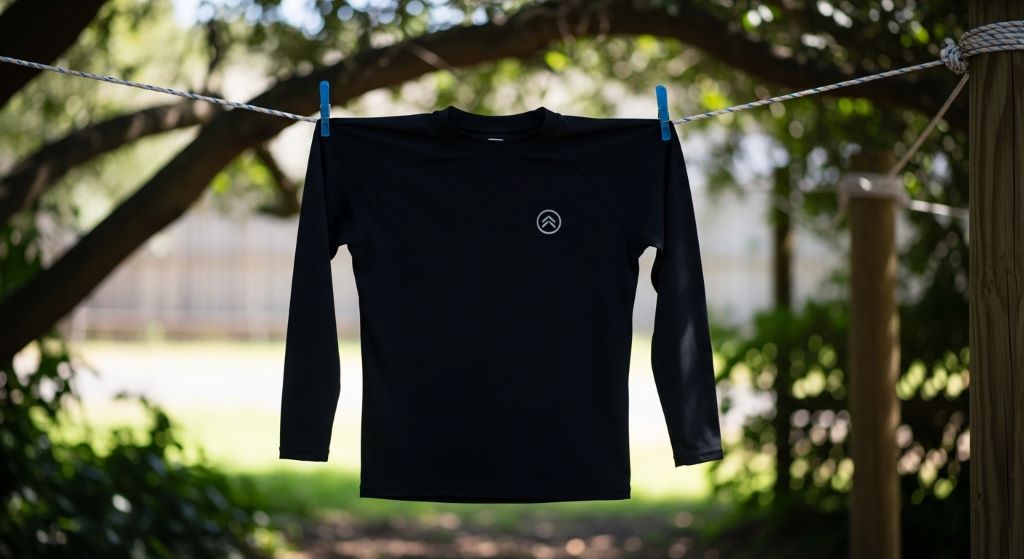
Always air dry your rash guard. Lay it flat on a clean surface or hang it on a line in a shaded area. Direct sunlight might seem like a natural choice, but UV exposure over long periods degrades the fabric’s color and protective coating. Therefore, drying in the shade is the better option.
Avoid hanging the rash guard by one shoulder on a wire hanger. This puts uneven stress on the fabric and can distort the shape over time. Instead, use a wide plastic hanger or lay it flat to dry evenly.
Dealing with Stubborn Stains and Odors
Even with regular care, stains and odors can build up over time. Sunscreen stains are particularly common and can be tricky to remove. The key is to act quickly.
For sunscreen stains, apply a small amount of mild dish soap directly to the affected area. Let it sit for a few minutes, then gently rub it with your fingers before rinsing thoroughly with cool water. Avoid using hot water, as heat sets stains into fabric permanently.
For persistent odors, soak the rash guard in a solution of cool water and a small amount of white vinegar for about thirty minutes. Vinegar naturally neutralizes odors without damaging synthetic fabrics. Rinse thoroughly afterward to remove any vinegar smell before drying.
However, if stains do not come out after a gentle treatment, do not keep scrubbing harder. Excessive force damages the fabric more than the stain itself.
Storing Your Rash Guard Correctly
Storage is an overlooked part of surf gear care that has a big impact on how long your rash guard lasts. Storing it incorrectly can cause permanent creases, mildew, and fabric breakdown even when you are not using it.
Never store your rash guard while it is still damp. Folding or rolling up wet fabric creates the perfect environment for mildew to grow. Mildew weakens fibers, produces a persistent smell, and is very difficult to remove once it takes hold.
Once your rash guard is fully dry, fold it loosely and store it in a cool, dry place away from direct sunlight. A drawer or shelf works well. Avoid compressing it under heavy items for extended periods, as this can distort the shape and put unnecessary stress on the seams.
If you are storing your rash guard for an extended period, such as at the end of a surf season, make sure it is completely clean before putting it away. Any residual salt, sunscreen, or organic material left in the fabric will continue to degrade it over time.
Gear Longevity Tips for Extending Rash Guard Life
Beyond washing and storage, a few extra habits help extend the lifespan of your rash guard considerably. These gear longevity tips are simple but make a noticeable difference when practiced consistently.
- Rotate between two or more rash guards if you surf frequently. This gives each one time to recover its shape between uses.
- Apply sunscreen before putting on your rash guard, not after. This keeps chemical residue off the fabric and preserves the UV-protective coating.
- Remove your rash guard carefully after each session. Pulling it roughly over your head stresses the collar and shoulder seams.
- Inspect your rash guard regularly for small holes or weakened stitching. Catching damage early allows for easy repairs before it spreads.
- Avoid sitting on rough surfaces like concrete or sharp rocks while wearing your rash guard. Abrasion quickly wears through synthetic fabrics.
When It Is Time to Replace Your Rash Guard
Even with excellent care, every rash guard eventually reaches the end of its useful life. Knowing when to replace it is just as important as knowing how to care for it.
The most important signal is a loss of UV protection. If the fabric has faded significantly or become thin and see-through in areas, it is no longer providing the protection it should. Additionally, if the elastic has gone flat and the rash guard no longer fits snugly, it will not protect you effectively from board rash or sun exposure.
Small holes and fraying seams are also clear signs that replacement is overdue. Continuing to wear a damaged rash guard can lead to skin irritation and sunburn in unprotected areas.
Conclusion
Your rash guard works hard every time you are in the water. Giving it proper care in return is a simple way to protect your investment and stay safe in the surf. Rinsing immediately after each session, washing surf wear gently with the right products, drying in the shade, and storing it correctly all add up to a rash guard that serves you well for years.
Following these practices as part of your regular surf routine takes very little extra time. However, the difference they make to the life and performance of your gear is significant. A well-maintained rash guard keeps its shape, its color, and most importantly, its protective qualities for far longer than one that is neglected.
Treat your gear right, and it will take care of you every time the surf calls.
Frequently Asked Questions
How often should I wash my rash guard?
Rinse your rash guard with fresh water after every session. A proper hand wash or machine wash on a gentle cycle is recommended after every three to five uses, or sooner if it develops an odor.
Can I put my rash guard in the dryer?
No. Tumble dryers generate heat that breaks down the elastic fibers in synthetic fabrics. Always air dry your rash guard flat or on a wide hanger in a shaded area.
What type of detergent is safe for rash guards?
Use a mild, gentle detergent with no bleach, enzymes, or fabric softeners. Products designed for delicate or technical fabrics work best and will not damage spandex or lycra blends.
How do I remove sunscreen stains from my rash guard?
Apply a small amount of mild dish soap to the stain, let it sit briefly, and rub gently before rinsing with cool water. Act as quickly as possible, since fresh stains are much easier to remove than dried ones.
How long should a rash guard last with proper care?
With consistent care, a quality rash guard can last two to four years or more. Frequent washing with harsh detergents, improper drying, and rough handling are the main factors that shorten its lifespan.
Related Topics:
How to Choose the Best Women’s Surf Shoes for Every Water Condition
How to Choose the Best Skate Shoes for Better Board Control