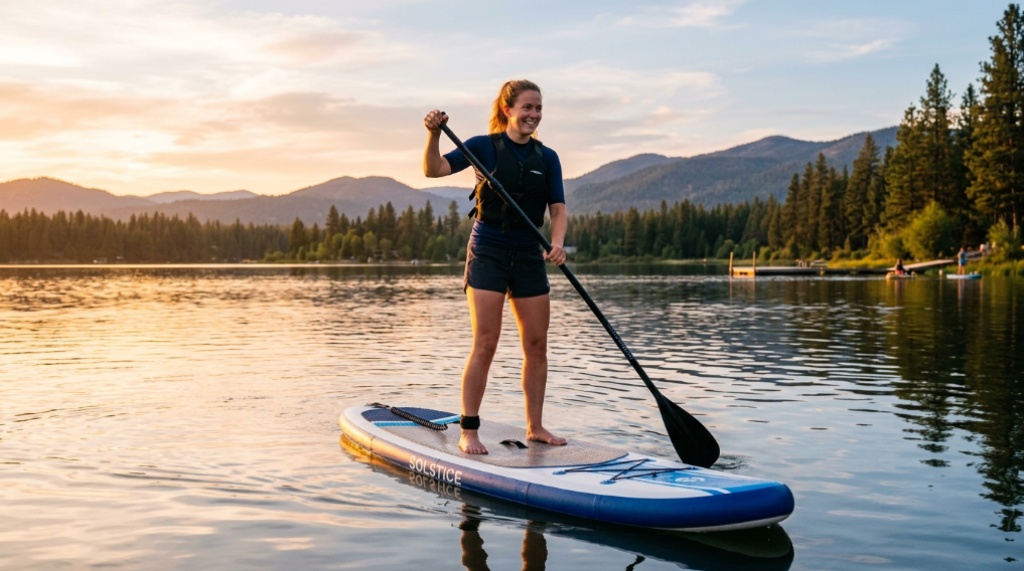
A calm lake at sunrise and a moving river on a summer afternoon can look equally inviting from the shore. On the water, though, they behave like two different sports. A paddler who is completely comfortable on flat water can feel surprisingly unprepared the first time a current pushes the board sideways. If you have followed any inflatable paddle board testing by Cool Surfing Gear, you already know that choosing the right board is only half the equation. This article explains how river and lake SUP actually differ in safety gear, paddling technique, and the decisions that keep a session enjoyable instead of stressful.
Quick Answer
Lake SUP happens on flat, mostly stationary water, so the main risks are wind, cold water, and boat traffic, and basic safety gear like a leash, PFD, and weather check is usually sufficient. River SUP involves current, moving hazards, and limited exit points, so it demands a quick-release leash, a more advanced PFD, stronger board control, and the ability to read water. Technique differs too: lakes reward steady, efficient strokes, while rivers require active edging, ferrying, and constant repositioning.
Key Takeaways
- Rivers require a quick-release leash and a higher-visibility PFD; lakes generally allow a standard ankle leash and a basic vest.
- River paddling demands whitewater-relevant skills like eddy turns and ferrying, while lake paddling is mostly about stroke efficiency and wind awareness.
- Current speed, not distance, is the biggest factor in river difficulty and risk.
- Lakes still present real hazards: cold water, sudden wind, and motorboat wakes.
- Beginners should build flat-water skills before attempting moving water, especially on a river with any current.
Why the Same Board Feels Different on a River and a Lake
On a lake, the water is essentially stationary. Your board moves because you paddle it, and wind is usually the only external force acting on you. On a river, the water itself is moving, which means your board is being pushed even when you stop paddling. That single difference changes everything about how you plan a session.
When you paddle upstream on a river, your forward speed and the current speed partially cancel out, so you can end up moving very slowly relative to the bank while working hard. When you paddle downstream, the current adds to your speed, which can feel effortless until you need to stop or turn. Lakes don’t have this dynamic at all, which is why a beginner can often self-rescue on a lake simply by kneeling and paddling back to shore, while a river can carry a struggling paddler into a hazard before they regain control.
This is also why board choice matters slightly differently. On a lake, longer touring-style boards track well and cover distance efficiently. On a river, shorter, more maneuverable boards or river-specific shapes with more rocker and volume in the nose tend to handle eddies and small features better.
Safety Gear: What Changes and What Stays the Same
Some safety items belong on every paddle session regardless of water type: a properly fitted personal flotation device (PFD), appropriate clothing for water temperature, sun protection, and a way to signal for help. Where the two environments diverge is in leash choice, helmet use, and the level of self-rescue skill you should realistically have before launching.
| Safety Item | Lake SUP | River SUP |
|---|---|---|
| Leash type | Standard ankle or calf leash | Quick-release leash (waist or calf) with a visible release tab |
| Helmet | Usually optional | Strongly recommended near rocks, rapids, or shallow sections |
| PFD | Required or recommended by most authorities; a low-profile vest is often enough | Higher-buoyancy, secure-fitting vest designed to stay in place in moving water |
| Self-rescue skills | Basic re-mounting on flat water | Re-mounting, swimming defensively, and exiting the current quickly |
| Main environmental risk | Cold water, wind, boat wakes | Current, strainers, rocks, low-head dams, foot entrapment |
The leash difference is the one people most often get wrong. On a lake, a standard ankle leash is fine because if you fall, the board and you drift together with no external force acting on the line. On a river, a leash attached to your ankle in moving water can wrap around a rock or branch and trap you. That is why river paddlers use a quick-release leash, usually worn at the waist or calf, so they can detach instantly if the board snags on something in the current.
A helmet is another river-specific addition. Lakes rarely have submerged rocks or logjams in the path of a paddler, but rivers frequently do, and a fall near a rock garden or shallow riffle can result in a head impact. If you’re paddling anything beyond gentle flat current, a helmet is a reasonable precaution rather than an overreaction.
Technique Differences That Actually Matter
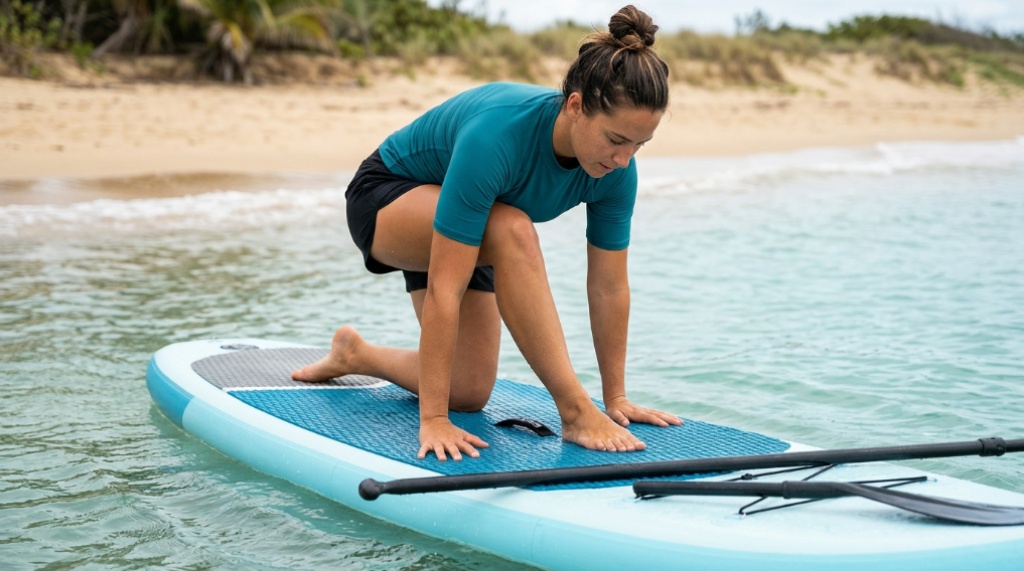
Lake technique is largely about efficiency. You want a stroke that tracks straight, conserves energy, and keeps you stable in wind and chop. The core skills are a solid forward stroke, a reliable sweep stroke for turning, and the ability to brace when a wake or gust hits you sideways.
River technique adds an entire vocabulary of moving-water skills on top of that foundation. The most important ones are:
- Ferrying: angling the board so the current helps you cross from one side of the river to the other without losing ground.
- Eddy turns: entering and exiting calm pockets behind rocks or obstacles, which are often the safest places to stop and regroup.
- Edging: tilting the board slightly to help it carve through current rather than being pushed sideways.
- Reading water: identifying features like V-shaped currents, which usually indicate deeper flow, and pillows or boils around rocks, which indicate hazards.
None of these skills transfer automatically from lake paddling. A paddler with excellent flat-water balance can still get caught off guard by a river’s lateral push, which is why most experienced river paddlers recommend practicing ferries and eddy turns in mild current before attempting anything faster.
Reading Conditions: What to Check Before You Launch
Before any paddle session, check the weather and water conditions. On a lake, that usually means wind speed and direction, air and water temperature, and whether thunderstorms are forecast. On a river, add current speed, water level, recent rainfall upstream, and known hazards along your intended route.
Current speed is the single most important river variable. A river moving at a few miles per hour can feel manageable in a wide, open section but becomes serious in a narrow channel with strainers, which are fallen trees or debris that let water pass through but can trap a paddler. Water level matters too: a stretch that is gentle at low flow can become fast and pushy after heavy rain, and features that are visible at low water may be submerged and invisible at high water.
Lakes have their own version of this. Wind can build quickly on large lakes, turning a calm morning into choppy, hard-to-paddle conditions by afternoon. Motorboat traffic adds wakes that can knock a paddler off balance, especially in narrow channels or near marinas, Before heading out on the water for your practice sessions, make sure to maintain your surfing rash guard to make it last longer to protect your skin and gear from wear.
Which Environment Should You Choose First?
If you are new to stand-up paddleboarding, start on a lake or other flat water. Flat water lets you build balance, stroke technique, and re-mounting skills without the added variable of current. Once you can paddle confidently in wind and small chop, and you can reliably get back on your board after a fall, you are in a much better position to try moving water.
When you do move to a river, choose a gentle, wide section with easy access and exit points, and go with someone experienced if possible. A stretch of river with a slow current and no significant hazards is a reasonable next step. A narrow, fast, or obstacle-filled river is not a beginner environment, no matter how good your lake skills are.
Board choice plays into this decision as well. A board that tracks beautifully on a lake may feel sluggish and hard to turn on a river, while a short, highly maneuverable river board can feel unstable and slow on open water. Many paddlers end up with two boards, or choose a versatile all-around shape that handles both environments acceptably without excelling at either.
Frequently Asked Questions
Can I use the same leash on a river and a lake?
You can use a quick-release leash on both, but you should not use a standard ankle leash on a river. In moving water, an ankle leash can snag on rocks or debris and trap you. A quick-release leash worn at the waist or calf lets you detach quickly if needed.
Do I need a helmet for lake paddleboarding?
Usually not. Helmets are mainly recommended for rivers, especially near rocks, rapids, or shallow sections. On a lake, a helmet is rarely necessary unless you are paddling in surf, near rocky shorelines, or in a race environment.
Is river SUP harder than lake SUP?
Generally yes, because moving water adds current, hazards, and limited exit points. The paddling skills required, such as ferrying and eddy turns, take practice to develop. Lake paddling is more forgiving and is the better place to build a foundation.
What is the biggest safety mistake on a river?
Underestimating current and using the wrong leash are two of the most common and most dangerous mistakes. Current can carry a paddler into a hazard faster than expected, and a snagged ankle leash in moving water is a serious entrapment risk.
Can I paddle a river on an inflatable paddle board?
Yes, inflatable paddle boards are commonly used on rivers, including some with mild current. The key factors are board shape, durability, and your skill level. River-specific inflatables tend to be shorter and more maneuverable, and they should be paired with proper safety gear.
How do I know if a river is too fast for me?
If you cannot confidently hold your position, ferry across the current, or reach shore quickly when you want to stop, the river is likely too fast for your current skill level. Start on slow, wide sections and build up gradually.
Conclusion
River SUP and lake SUP share the same basic gear list, but the environment changes which items matter most and which skills you need. Lakes reward steady, efficient paddling and wind awareness. Rivers demand quick-release gear, stronger board control, and the ability to read moving water. If you are new to the sport, build your skills on flat water first, then choose a gentle river section when you are ready. Match your board, leash, and preparation to the water in front of you, and both environments can be genuinely enjoyable.