
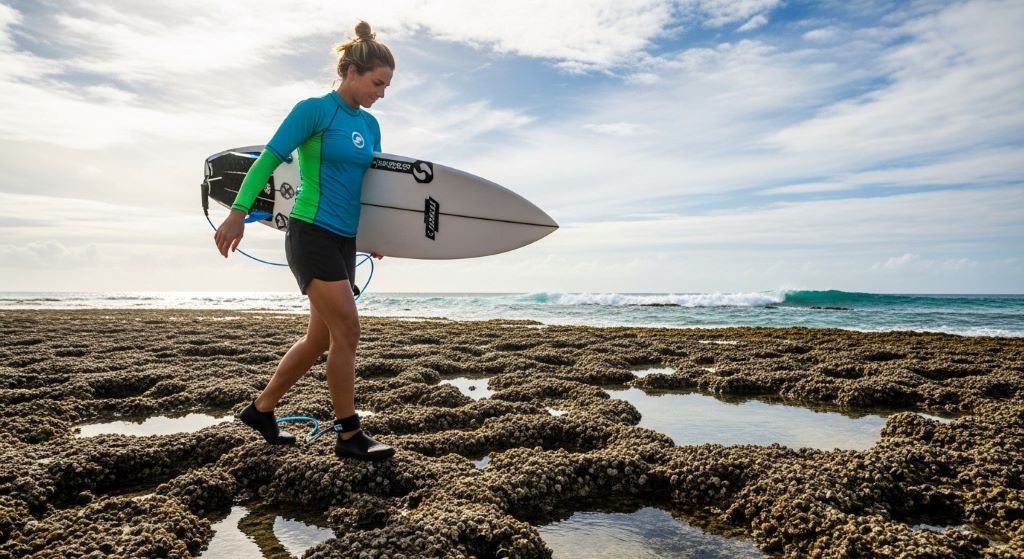
Standing on a rocky shore with waves crashing around you requires more than just courage. Your feet need proper protection to handle sharp coral, slippery surfaces, and powerful currents. Many women surfers overlook the importance of quality footwear, yet this single piece of equipment can make the difference between a fantastic surf session and a trip to the emergency room.
Choosing the right water shoes involves understanding your specific needs, the conditions you’ll face, and the features that matter most. This guide will walk you through everything you need to know about selecting footwear that keeps you safe, comfortable, and performing at your best in any aquatic environment.
Understanding Different Water Conditions
Every beach presents unique challenges that demand specific footwear solutions. Rocky coastlines feature sharp edges and uneven surfaces that can easily cut unprotected feet. Meanwhile, sandy bottoms might seem gentle but often hide sharp shells, broken glass, or stinging creatures.
Reef breaks create some of the most demanding conditions for surfers. The coral can slice through skin like a razor, and the irregular surface makes balance tricky. Additionally, strong currents around reefs require shoes with exceptional grip to prevent dangerous slips.
Cold water environments present another set of concerns entirely. Your feet lose heat rapidly in chilly temperatures, which affects circulation and overall body warmth. Therefore, insulation becomes just as important as protection in these conditions.
Essential Features to Consider
The sole design determines how well you’ll maintain contact with your board and the ocean floor. Look for patterns that channel water away while providing multidirectional traction. Deep grooves work better than shallow ones, particularly on wet surfaces where you need maximum grip.
Drainage systems prevent your shoes from becoming waterlogged and heavy. Quality designs incorporate mesh panels or strategically placed holes that allow water to escape quickly. However, these openings must be small enough to keep out sand and pebbles that could cause discomfort.
Material selection affects durability, flexibility, and warmth. Neoprene offers excellent insulation and stretches to fit your foot shape comfortably. Synthetic materials dry faster and often cost less, though they may not provide the same level of thermal protection.
The closure system needs to keep shoes securely attached without creating pressure points. Velcro straps allow quick adjustments and easy removal, while lace-up designs offer more customization. Some modern options use elastic bands or drawstrings for a combination of security and convenience.
Thickness and Temperature Requirements
Water temperature directly influences the thickness you need in surf footwear for women. Warm tropical waters above 70 degrees Fahrenheit require minimal insulation, so thin materials around 2mm work perfectly. These lightweight options provide protection without sacrificing board feel.
Moderate temperatures between 60 and 70 degrees call for 3mm thickness. This middle ground offers decent warmth while maintaining enough flexibility for complex foot movements. Most surfers find this range comfortable for spring and fall sessions in temperate climates.
Cold conditions below 60 degrees demand 5mm or thicker materials. Your extremities lose heat first, so proper insulation becomes critical for safety and enjoyment. Some extreme cold water enthusiasts even opt for 7mm options when surfing in near-freezing temperatures.
Fit and Sizing Considerations
Proper fit ensures comfort and prevents blisters during extended wear. Your shoes should feel snug without pinching, similar to a firm handshake. Too much space allows your foot to slide around, creating friction that leads to painful hot spots.
Different brands use varying size charts, so always check specific measurements rather than relying on your street shoe size. Measure your foot length and width, then compare these numbers to the manufacturer’s guidelines. Remember that neoprene stretches slightly with use, so a tight initial fit often becomes perfect after a few sessions.
Toe box shape matters more than many people realize. Your toes should lie flat without curling or overlapping. Additionally, the arch support should match your natural foot shape to prevent fatigue during long sessions.
Ankle Height Options
Low-cut designs resemble regular water shoes and offer maximum mobility. These work well in warm water where insulation matters less than agility. They slip on quickly and don’t interfere with ankle movement, making them popular for shortboard surfing.
Mid-height options provide extra coverage around the ankle bone. This style offers more protection from scrapes while still allowing good range of motion. Therefore, they represent a popular compromise for varied conditions.
High-top boots deliver maximum warmth and protection. The extended coverage keeps water from flushing through, maintaining a warm layer around your entire foot and lower leg. However, this design can feel restrictive if you’re not accustomed to the reduced flexibility.

Sole Flexibility and Board Feel
The eternal balance between protection and sensitivity challenges every surfer. Thick, rigid soles shield your feet from sharp objects but reduce your ability to feel the board beneath you. This sensory feedback helps you make subtle adjustments that improve your performance.
Split-toe designs attempt to solve this dilemma by separating the big toe from the others. This configuration mimics barefoot surfing more closely while still offering protection. Many experienced surfers swear by this style, though it requires an adjustment period.
Testing flexibility involves bending the shoe at various points. Quality ocean grip shoes flex naturally at the ball of the foot, where your foot bends during movement. Stiff midsoles that resist this natural motion will cause fatigue and reduce your control.
Durability and Construction Quality
Seam construction reveals a lot about overall quality. Flatlock stitching lies flat against your skin, preventing the irritation that raised seams cause. Double-stitched or glued seams add strength and reduce the chance of splitting under stress.
Reinforced areas at high-wear points extend the life of your footwear significantly. Look for extra material around the toes, heel, and sides where abrasion occurs most frequently. These reinforcements should integrate smoothly without creating uncomfortable bulk.
UV resistance helps materials maintain their integrity under constant sun exposure. Cheaper options often degrade quickly when left to dry in bright sunlight, becoming brittle and cracking. Quality materials resist this damage, maintaining flexibility season after season.
Special Considerations for Different Surf Styles
Longboarders need different features than shortboard riders. The cross-stepping and nose riding that define longboard surfing require excellent grip but don’t demand the same quick response. Therefore, slightly thicker soles work fine and provide extra cushioning.
Bodyboarders spend more time kicking and less time standing, changing the priority list. Fin pockets or compatible designs that work with swim fins become important. Additionally, reinforced tops prevent fin straps from cutting into the shoe material.
Stand-up paddleboarders benefit from shoes with drain holes positioned to avoid creating suction on the board surface. The larger, stable platform of a paddleboard makes maximum grip less critical than comfort during long sessions.
Breaking In Your New Shoes
New female surf booties often feel stiff and uncomfortable initially. Wearing them around the house helps materials conform to your unique foot shape. Fill them with warm water and wear them while they’re wet to accelerate the molding process.
Gradual introduction prevents blisters and allows you to identify any fit issues before committing to a long session. Start with short surf sessions, then progressively increase duration as the materials soften and adapt.
Maintenance and Care
Rinsing thoroughly after each use removes salt, sand, and organic matter that accelerate deterioration. Fresh water prevents salt crystals from forming, which can damage materials and stitching over time. Pay special attention to drainage holes where debris accumulates.
Proper drying technique matters as much as rinsing. Avoid direct sunlight and heat sources that can degrade materials. Instead, hang shoes in a shaded, well-ventilated area where air can circulate freely. Turn them inside out occasionally to ensure complete drying.
Storage in a cool, dry place away from chemicals preserves materials between uses. Folding or crushing shoes can create permanent creases in neoprene, so store them flat or hanging. Furthermore, keeping them away from petroleum products prevents chemical damage.
Budget Considerations
Entry-level options typically cost between twenty and forty dollars. These basic models provide adequate protection for occasional use in mild conditions. However, they may lack advanced features and durability that frequent surfers need.
Mid-range choices from forty to eighty dollars offer better materials and construction. Most recreational surfers find excellent value in this category, getting reliable performance without premium pricing. These shoes typically last through multiple seasons with proper care.
Premium models exceeding eighty dollars incorporate cutting-edge materials and thoughtful design details. Serious surfers who spend significant time in the water often find the investment worthwhile. The enhanced durability, comfort, and performance justify the higher initial cost.
Environmental and Ethical Considerations
Sustainable manufacturing practices increasingly influence purchasing decisions. Some companies use recycled materials, reducing environmental impact without sacrificing quality. Others focus on fair labor practices and transparent supply chains.
Longevity represents perhaps the most important environmental factor. A durable pair of shoes that lasts several years creates less waste than cheap options requiring frequent replacement. Therefore, investing in quality often aligns with environmental values.
Making Your Final Decision
Prioritizing your specific needs leads to the best choice. Someone surfing warm reef breaks needs different features than a cold-water point break enthusiast. List your most common conditions and the features that address those challenges.
Reading reviews from other women surfers provides valuable real-world insights. Pay attention to comments about sizing, durability, and how shoes perform in conditions similar to yours. However, remember that individual preferences vary, so one person’s perfect shoe might not suit you.
Trying before buying eliminates much of the guesswork. Many surf shops allow you to test shoes in controlled conditions or have generous return policies. Take advantage of these opportunities to ensure you’re making the right choice.
Recognizing When to Replace Your Shoes
Visible wear indicators include thinning soles, separated seams, and torn materials. Once the sole wears through to inner layers, protection decreases significantly. Similarly, open seams allow water to flush through, reducing warmth and potentially causing blisters.
Performance changes signal declining effectiveness even when damage isn’t obvious. Reduced grip, water retention, or comfort issues indicate that materials have degraded beyond effective use. Continuing to use compromised footwear increases injury risk.
Conclusion
Selecting appropriate surf footwear for women involves balancing protection, performance, and comfort for your specific conditions. Understanding the relationship between water temperature and thickness helps narrow your options, while considering sole design, materials, and fit ensures optimal performance. Whether you’re navigating rocky shores, coral reefs, or sandy beaches, the right shoes enhance both safety and enjoyment.
Remember that quality footwear represents an investment in your surfing experience and personal safety. Take time to assess your needs, research options thoroughly, and choose shoes that match your style and conditions. With proper selection and maintenance, your shoes will provide reliable service through countless sessions, allowing you to focus on what matters most—enjoying your time in the water.
Frequently Asked Questions
Can I use regular water shoes for surfing?
Regular water shoes often lack the grip, durability, and fit needed for surfing. Waves create much more force than casual water activities, and standard water shoes may slip off or fail to provide adequate traction on a board. Dedicated surf shoes feature specialized soles and secure closures designed specifically for wave riding.
How tight should surf shoes fit?
Surf shoes should fit snugly without causing pain or numbness. You should be able to wiggle your toes slightly, but your foot shouldn’t slide around inside the shoe. Neoprene materials stretch with use, so a firm initial fit often becomes perfect after a few sessions in the water.
Do I need different shoes for different seasons?
Water temperature determines thickness requirements more than air temperature. If you surf year-round in locations with significant seasonal temperature variation, you’ll likely need multiple pairs. Warm summer conditions require thin protection, while winter sessions demand thick insulation to prevent dangerous heat loss.
How long do surf shoes typically last?
With proper care, quality surf shoes last one to three years depending on usage frequency. Weekly surfers might need replacement annually, while occasional users can extend life to three years or more. Factors affecting longevity include material quality, maintenance habits, and the harshness of conditions you encounter.
Can surf shoes prevent all foot injuries?
Surf shoes significantly reduce injury risk but cannot guarantee complete protection. They guard against cuts from coral and rocks, stings from sea creatures, and thermal injuries from extreme temperatures. However, severe impacts or encounters with extremely sharp objects may still cause injury despite wearing protective footwear.
Related Topics:
How to Start Skateboarding as an Adult with a Beginner Skateboard
Safest Sports with Lowest Ligament Strain Risk