
Many golfers focus on clubs when they want more distance. But the golf ball plays a major role in how far the ball actually travels. The right ball can improve launch angle, reduce spin, and optimize flight stability. These factors directly impact distance.
Long distance golf balls are designed with advanced aerodynamics, multi-layer construction, and optimized compression levels. These features help players maximize energy transfer during impact while maintaining stable flight through the air.
If you choose the wrong ball, you may lose distance even with a perfect swing. According to launch monitor data from multiple golf equipment studies, the difference between a high-spin ball and a distance-optimized ball can reach 10–15 yards off the tee.
This guide explains how to pick the best golf balls for maximum distance. You will learn how golf ball aerodynamics work, how compression affects performance, and which features actually add yards to your drives.
If you want longer drives without changing your swing, the right ball is often the fastest upgrade.
Why Does the Golf Ball Matter for Distance?
Short answer: The golf ball affects distance because its construction determines launch speed, spin rate, and aerodynamic stability.
Many golfers underestimate how much the ball affects performance. When the clubface strikes the ball, energy transfer occurs in a fraction of a second. The ball’s internal layers control how efficiently that energy converts into speed.
Distance-focused balls usually prioritize:
- Higher ball speed
- Lower driver spin
- Efficient aerodynamic lift
- Optimized compression for energy transfer
Golf ball aerodynamics are especially important once the ball leaves the clubface. The dimple pattern helps maintain lift and reduce drag. Without dimples, a golf ball would travel less than half the distance.
A case study from golf equipment testing labs shows that optimized dimple patterns can reduce drag by nearly 50%. This allows the ball to maintain velocity longer during flight.
So while swing speed matters, ball technology determines how efficiently that speed converts into distance.
How Do Long Distance Golf Balls Work?
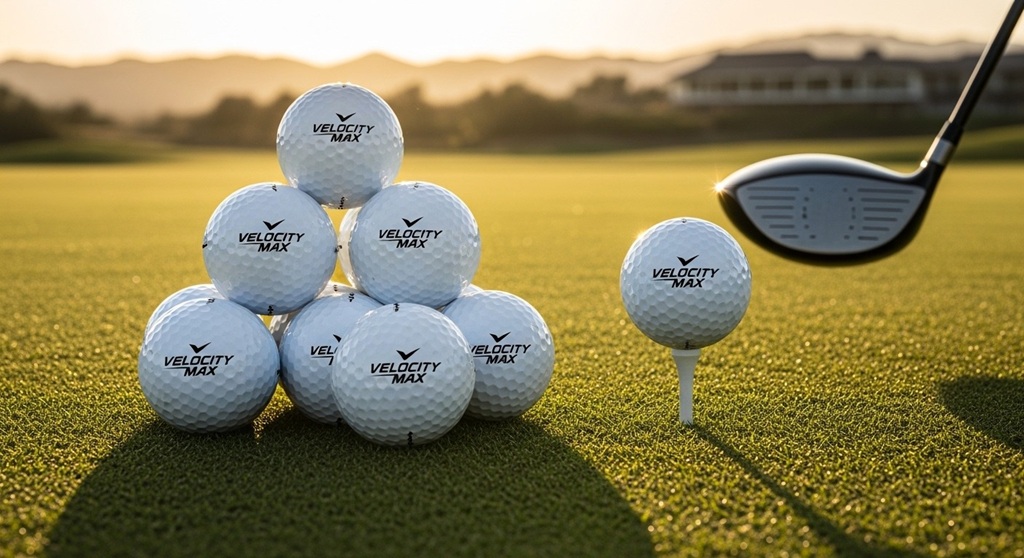
Short answer: Long distance golf balls maximize speed and reduce spin through core design, compression tuning, and aerodynamic dimples.
Distance balls usually follow a specific design philosophy. They focus on maximizing initial velocity while minimizing energy loss.
1. Large Energy Core
Most long distance golf balls feature a large core made from high-energy rubber compounds. This core compresses at impact and rebounds quickly, increasing ball speed.
The faster the rebound, the more distance potential the ball has.
2. Reduced Driver Spin
High spin increases lift but can also cause the ball to climb too steeply. That reduces total distance.
Distance balls use cover materials and internal layers that reduce driver spin. Lower spin produces a more penetrating ball flight.
3. Optimized Golf Ball Aerodynamics
Dimples control airflow around the ball. Manufacturers use computational fluid dynamics to design patterns that stabilize flight.
Aerodynamic optimization can increase carry distance while improving directional stability.
In simple terms, long distance golf balls are engineered to convert swing energy into forward momentum as efficiently as possible.
What Role Does Golf Ball Compression Play in Distance?
Short answer: Compression determines how much the ball deforms at impact and how efficiently it transfers energy.
Compression ratings usually range from 30 to 110. The right compression depends on your swing speed.
| Swing Speed | Recommended Compression | Distance Benefit |
|---|---|---|
| Below 85 mph | Low compression (30–60) | Easier compression for better energy transfer |
| 85–100 mph | Medium compression (60–90) | Balanced speed and control |
| Above 100 mph | High compression (90–110) | Maximum rebound and speed |
If compression is too high for your swing speed, the ball will not compress enough. That means lost distance.
Conversely, if compression is too low for a fast swing, the ball may over-compress and lose efficiency.
Matching compression with swing speed is one of the easiest ways to gain distance without changing technique.
How Do Golf Ball Aerodynamics Increase Distance?
Short answer: Golf ball aerodynamics increase distance by reducing drag and creating lift through dimple patterns.
The dimples on a golf ball are not just cosmetic. They fundamentally change how air flows around the ball.
Without dimples, air separates from the ball’s surface quickly, creating large drag forces. Dimples create a thin turbulent boundary layer that keeps airflow attached longer.
This reduces drag and increases lift.
Research from golf engineering studies shows that dimpled balls can travel nearly twice as far as smooth balls.
Different dimple designs also affect flight characteristics:
- Shallow dimples reduce drag for longer carry
- Deep dimples increase lift for higher trajectory
- Multi-pattern dimples stabilize flight in wind
Modern golf ball aerodynamics rely heavily on computer modeling. Companies test thousands of patterns before finalizing production.
The goal is always the same: maximize carry distance while keeping the ball stable in real playing conditions.
Should Beginners Use Distance Golf Balls?
Short answer: Yes. Beginners usually benefit from distance-focused balls because they reduce spin and increase forgiveness.
Most beginner golfers struggle with slice spin and inconsistent contact. High-spin balls can exaggerate these issues.
Distance balls help in several ways:
- Lower side spin reduces slicing
- Higher launch improves carry distance
- Durable covers handle mishits better
Because beginners typically have slower swing speeds, low-compression distance balls are often the best option.
These balls compress more easily and generate better energy transfer even with moderate swings.
What Ball Construction Produces the Longest Drives?
Short answer: Two-piece golf balls usually produce the longest drives due to their low spin and high resilience cores.
Golf balls are built in layers. The number of layers affects spin, feel, and distance.
Two-Piece Balls
- Large solid core
- Durable ionomer cover
- Low spin
- Maximum distance
Three-Piece Balls
- Additional mantle layer
- Balanced distance and control
- Moderate spin
Four- or Five-Piece Balls
- Tour performance design
- Higher spin for control
- Less emphasis on raw distance
For pure distance, two-piece construction is still the most efficient design for many players.
How Can You Test Which Golf Ball Goes the Farthest?
Short answer: Use a launch monitor or on-course testing to compare carry distance, spin rate, and ball speed.
The best golf ball for distance depends on your swing characteristics. Testing provides objective data.
Key metrics to compare:
- Ball speed
- Launch angle
- Spin rate
- Total distance
Many golf fitting centers use launch monitors like TrackMan or GCQuad to analyze these metrics.
For example, a test comparing distance balls versus tour balls showed:
| Ball Type | Average Ball Speed | Average Distance |
|---|---|---|
| Tour ball | 152 mph | 265 yards |
| Distance ball | 156 mph | 274 yards |
This difference may seem small, but over a round it can significantly improve scoring opportunities.
What Features Should You Look for in Long Distance Golf Balls?
Short answer: Choose balls with high-energy cores, aerodynamic dimple patterns, and compression matched to your swing speed.
When shopping for long distance golf balls, focus on these key factors:
- Low driver spin
- High initial ball speed
- Durable cover material
- Advanced dimple pattern
- Compression suited to your swing speed
A ball that combines these features will help maximize both carry distance and roll after landing.
Distance gains may only be a few yards per shot, but those yards add up across a full round.
Conclusion: How Can the Right Golf Ball Add Instant Distance?
Many golfers search for distance by changing their swing or buying new drivers. But the golf ball itself is one of the most overlooked performance factors.
Long distance golf balls are engineered to maximize ball speed, optimize golf ball aerodynamics, and reduce spin. These features allow the ball to travel farther with the same swing.
By choosing the right compression, construction, and aerodynamic design, golfers can gain measurable distance without changing technique.
The key is matching the ball to your swing speed and playing style. A simple switch in ball design can produce longer drives and better course positioning.
Call to Action:
If you want to improve your driving distance, start testing different golf balls during your next round or practice session. Compare performance, track your distances, and choose the ball that consistently gives you the longest and most stable flight.
The right golf ball might be the easiest upgrade you make to your game.
Frequently Asked Questions About Long Distance Golf Balls
Do golf balls really affect driving distance?
Yes. Golf balls influence ball speed, spin rate, and launch conditions. These factors directly affect carry distance and total distance. Distance-optimized balls typically produce lower spin and higher speed.
What compression golf ball goes the farthest?
The farthest ball depends on swing speed. Golfers with slower swings benefit from low-compression balls, while faster swings generate more distance with higher compression designs.
Are two-piece golf balls better for distance?
Two-piece golf balls often produce the longest drives because they generate low spin and high rebound speed. They are commonly used by recreational players seeking maximum distance.
How do dimples help golf ball aerodynamics?
Dimples reduce drag and create lift by controlling airflow around the ball. This allows the ball to stay airborne longer and travel significantly farther compared to a smooth ball.
Do professional golfers use distance balls?
Most professional golfers prefer multi-layer balls for control and spin around the greens. However, some players use lower-spin designs when they want more driving distance.
Can switching golf balls add distance without changing your swing?
Yes. Using a ball optimized for your swing speed can increase ball speed and reduce spin, often adding several yards to drives without any swing changes.
Read More Also: How to Pick the Best Golf Practice Mats for Indoor & Outdoor Use
Find out: How to Improve Your Soccer Skills Faster: The Ultimate Training Guide