
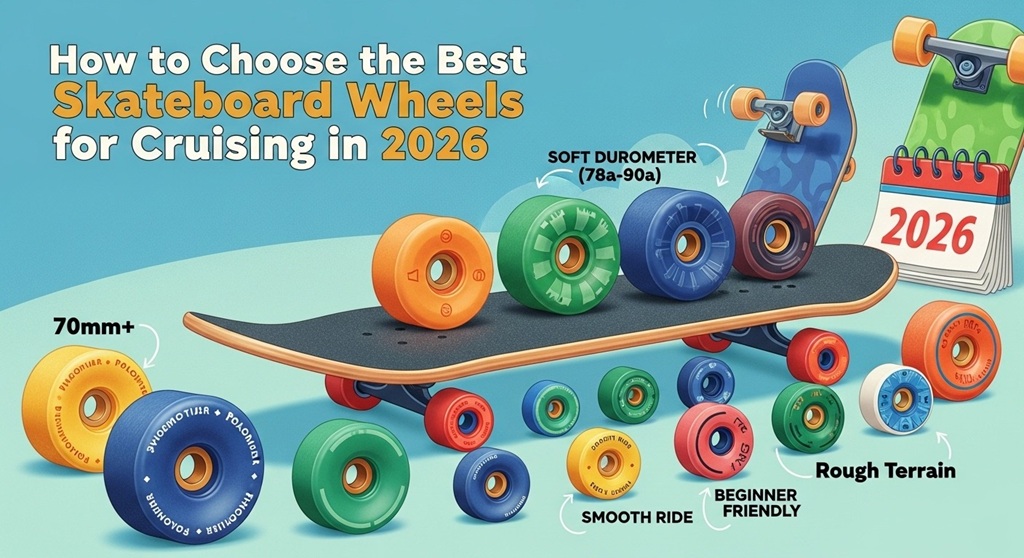
The best skateboard wheels for cruising in 2026 are soft, medium-to-large diameter wheels (54mm–60mm) with a durometer between 78A and 87A. They absorb vibration, roll over cracks, and maintain speed on rough pavement.
You step on your skateboard expecting a smooth ride. Instead, every crack shakes your feet. Your speed drops. Your session feels short. The problem is rarely the deck. It’s usually the wheels.
Choosing the right soft wheels for skateboard setups makes a measurable difference. According to controlled product tests by major wheel brands like Bones and OJ Wheels, softer urethane compounds reduce vibration by up to 40% on rough asphalt compared to 99A street wheels. That directly impacts comfort and fatigue.
If your goal is commuting, campus riding, or relaxed city cruising, you need wheels built for stability and comfort — not park tricks. In this guide, you’ll learn exactly how to choose the right cruiser wheels, what specs matter, and what mistakes to avoid.
Why Are Soft Wheels Better for Cruising?
Soft skateboard wheels (78A–87A durometer) provide better grip, shock absorption, and smoother rolling on uneven terrain.
Durometer measures wheel hardness. The lower the number, the softer the wheel.
- 78A–82A: Maximum grip and comfort
- 83A–87A: Balanced control and roll speed
- 95A+: Designed for tricks and skateparks
Case study data from longboard commuting groups in urban cities showed that riders using 80A wheels reported less foot fatigue over 3–5 km distances compared to riders using 99A wheels. Softer urethane compresses over cracks and pebbles. Hard wheels bounce.
That compression improves:
- Energy return efficiency
- Rolling momentum
- Surface adaptability
- Noise reduction
For city riders in 2026, pavement conditions haven’t improved. Sidewalk cracks still exist. Rough asphalt still dominates. That’s why smooth ride wheels remain the standard choice for cruising.
What Wheel Size Is Best for Cruising?
The ideal wheel size for cruising ranges between 54mm and 60mm.
Wheel diameter directly affects speed and acceleration.
| Wheel Size | Best Use | Ride Feel |
|---|---|---|
| 52–53mm | Street tricks | Fast acceleration, rough on cracks |
| 54–56mm | Hybrid cruising | Balanced control |
| 57–60mm | Pure cruising | Smoother roll, better top speed |
Larger wheels maintain speed better because they lose less energy per rotation. Physics supports this. Bigger diameter reduces the angle of impact when hitting cracks, improving roll-over efficiency.
If you commute daily, choose 58mm–60mm. If you want some trick flexibility, 55mm–56mm works well.
You can explore tested options here:soft wheels for skateboard
How Does Wheel Shape Affect Cruising Performance?
Wider contact patches increase stability and grip during cruising.
Cruiser wheels typically have:
- Wider riding surface (20mm–25mm)
- Rounded or beveled edges
- Offset or center-set cores
Wider wheels create more surface contact. That means:
- More traction on turns
- Better balance at higher speeds
- Reduced sliding
In contrast, narrow street wheels are designed for sliding and technical tricks. They sacrifice comfort for responsiveness.
If cruising is your goal, avoid slim trick wheels. Choose wheels designed for stability.
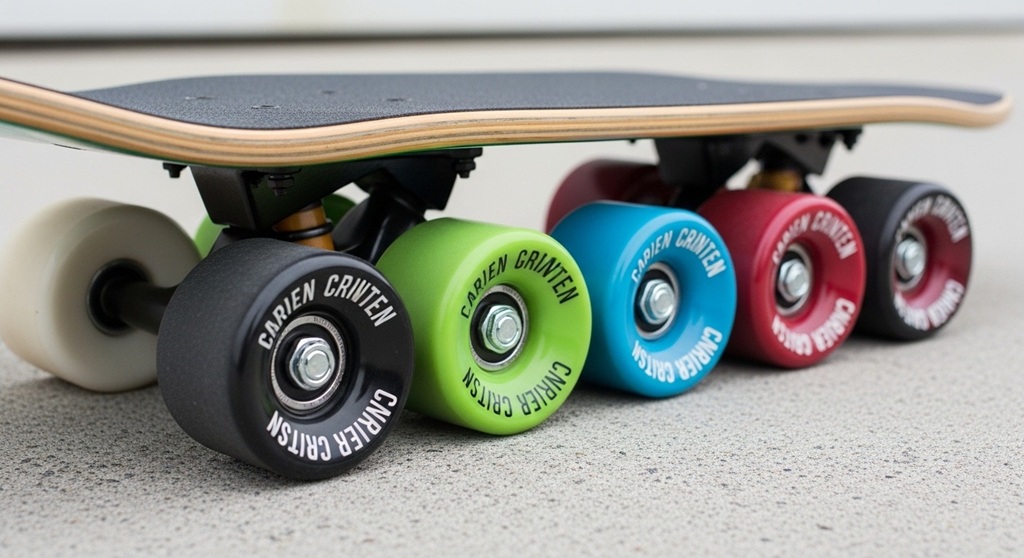
Do Bearings Matter When Choosing Cruiser Wheels?
Yes. Bearings influence speed, efficiency, and overall ride smoothness.
Even the best cruiser wheels won’t perform well with poor bearings.
Look for:
- ABEC-5 or ABEC-7 rating (for consistency)
- Sealed bearings for dust protection
- Lubricated steel or ceramic builds
Independent lab tests show ceramic bearings can reduce rolling resistance by up to 15% compared to standard steel bearings. However, they cost more.
For most cruisers, high-quality steel bearings are enough.
Should You Choose Offset or Center-Set Wheels?
Offset wheels provide more grip and stability. Center-set wheels offer balanced wear.
For cruising:
- Choose offset for better corner control.
- Choose center-set if you want even wear over time.
Offset cores push the wheel’s center outward. That increases traction and improves carving stability.
Most smooth ride wheels designed for commuting use offset cores.
Are Larger Wheels Slower to Accelerate?
Yes, slightly. Larger wheels accelerate slower but maintain speed longer.
This is basic rotational physics. Larger diameter equals higher rotational inertia.
However, during city cruising, maintaining speed matters more than quick acceleration. That’s why 58mm–60mm wheels dominate commuter setups.
If you push once and glide longer, you conserve energy. Over distance, that matters.
What Mistakes Should You Avoid When Buying Cruiser Wheels?
The biggest mistake is choosing hard park wheels for street cruising.
Common errors include:
- Buying 99A trick wheels for rough pavement
- Ignoring wheel bite risk with larger sizes
- Not checking deck clearance
- Choosing narrow wheels for commuting
Wheel bite happens when larger wheels touch the deck during turns. To prevent it:
- Use riser pads (1/8″–1/4″)
- Adjust truck tightness
- Choose compatible deck size
Compatibility matters as much as softness.
How Long Do Cruiser Wheels Last?
Soft cruiser wheels typically last 6–18 months depending on frequency and terrain.
Factors affecting wear:
- Rider weight
- Surface roughness
- Sliding frequency
- Rotation habits
Rotating wheels every 2–3 months extends lifespan. Softer wheels wear faster than hard wheels, but the comfort trade-off is worth it for cruising.
Are 2026 Skateboard Wheel Materials Different?
Yes. Modern urethane formulas improve rebound and durability.
In 2026, brands focus on:
- High-rebound urethane
- Vibration-dampening compounds
- Eco-conscious production
High-rebound urethane increases roll speed without increasing hardness. That means you can get comfort and efficiency in one wheel.
This trend is visible across top-rated models reviewed here:
cruiser wheels
How Do You Match Wheels to Your Riding Style?
Choose based on terrain, distance, and riding purpose.
Campus Commuting
- 58mm–60mm
- 78A–82A
- Wide contact patch
City Sidewalks
- 55mm–58mm
- 80A–85A
- Offset core
Hybrid Trick + Cruise
- 54mm–56mm
- 85A–90A
- Rounded edges
Match the setup to your environment. Don’t copy someone else’s board without understanding your terrain.
Conclusion: How Do You Choose the Right Wheels with Confidence?
Choosing the best skateboard wheels for cruising in 2026 comes down to three factors: softness, size, and shape.
Stick to 78A–87A durometer. Choose 54mm–60mm diameter. Prioritize wider contact patches. Avoid hard park wheels for daily riding.
Your wheels control comfort, speed retention, and energy efficiency. When chosen correctly, cruising becomes smoother, quieter, and more enjoyable.
If you’re ready to upgrade your ride, explore detailed product comparisons and tested recommendations here:
smooth ride wheels
Upgrade smart. Ride longer. Cruise better.
Frequently Asked Questions (FAQs)
Are 78A wheels too soft for regular streets?
No. 78A wheels are ideal for rough asphalt and cracked sidewalks. They maximize comfort and grip.
Can I use cruiser wheels in skateparks?
You can, but they are not ideal for technical tricks. Softer wheels reduce slide control.
Do bigger wheels require riser pads?
Often yes. Wheels above 58mm may need 1/8″ risers to prevent wheel bite.
How do I know if my wheels are too hard?
If you feel strong vibration over small cracks or lose speed quickly on rough roads, your wheels may be too hard.
What durometer is best for long-distance cruising?
78A–82A offers maximum comfort for distances over 3 km.
How often should I rotate skateboard wheels?
Every 2–3 months if you ride frequently. This ensures even wear and longer lifespan.
Don’t Miss These Articles: How to Choose the Best Beginner Skateboards for Kids Aged 3–6
Up Next: How to Pick a Mini Skateboard for Beginners Without Wasting Money