Living in an apartment shouldn’t mean sacrificing your cycling training. Many riders worry about disturbing neighbors when they want to ride indoors. The sound of traditional trainers can echo through walls and floors, creating tension with the people living around you. Fortunately, modern technology has made it possible to maintain your fitness without causing a disturbance.
Choosing the right equipment for indoor cycling in a shared living space requires careful consideration. You need to balance performance, noise levels, and your budget while thinking about your neighbors’ comfort. This guide will help you understand what makes certain rollers quieter than others and how to select the best option for your situation.
Whether you’re a serious cyclist maintaining off-season fitness or someone who prefers indoor riding, finding quiet equipment is essential for apartment living. The right choice will let you train effectively while maintaining good relationships with those living above, below, and beside you.
Understanding Roller Noise Sources
Before you can choose quiet rollers, you need to understand where the noise comes from. Different components create different sounds, and knowing these sources helps you make an informed decision.
The drums or cylinders that your wheels spin on generate the most obvious noise. Traditional aluminum rollers create a distinct humming sound that increases with speed. The material composition, diameter, and design of these drums significantly affect the volume and pitch of the sound they produce.
Your bike’s drivetrain contributes substantially to overall noise levels. The chain moving across gears, the cassette engaging with the chain, and the derailleur shifting all create mechanical sounds. While these aren’t technically part of the roller system, they combine with roller noise to create the total sound output.
Vibration transmission through the floor causes another major concern in apartments. Even relatively quiet equipment can disturb neighbors below if vibrations travel through the building structure. The frame design and how the rollers contact the floor play crucial roles in this transmission.
Air resistance creates noise at higher speeds. Some roller designs incorporate resistance units that generate their own sounds. Understanding these various sources helps you evaluate product specifications and user reviews more effectively.
Key Features of Low Noise Indoor Trainers
When shopping for apartment-friendly rollers, certain features indicate quieter operation. Recognizing these characteristics helps you narrow your options quickly.
Parabolic drum designs reduce noise compared to straight cylindrical drums. The curved shape helps your wheel track more naturally and creates less friction-related sound. Larger diameter drums also tend to run quieter because they rotate more slowly for the same wheel speed.
High-quality bearings make a substantial difference in noise production. Sealed cartridge bearings with proper lubrication run smoothly and quietly. Cheap bearings create grinding sounds and may develop squeaks over time. Additionally, the number and positioning of bearings affect both noise and stability.
The frame material and construction influence vibration dampening. Steel frames tend to absorb vibrations better than aluminum, though they’re heavier. Some manufacturers use composite materials or add rubber components specifically to reduce noise transmission.
Belt-driven resistance units operate more quietly than magnetic or fluid systems. However, rollers typically rely on the natural resistance of your tire against the drums, making this less relevant than for stationary trainers. Still, if you choose rollers with added resistance options, the resistance mechanism matters.
Roller Types and Their Noise Characteristics
Different roller designs produce varying noise levels. Understanding these categories helps you choose the right type for your needs.
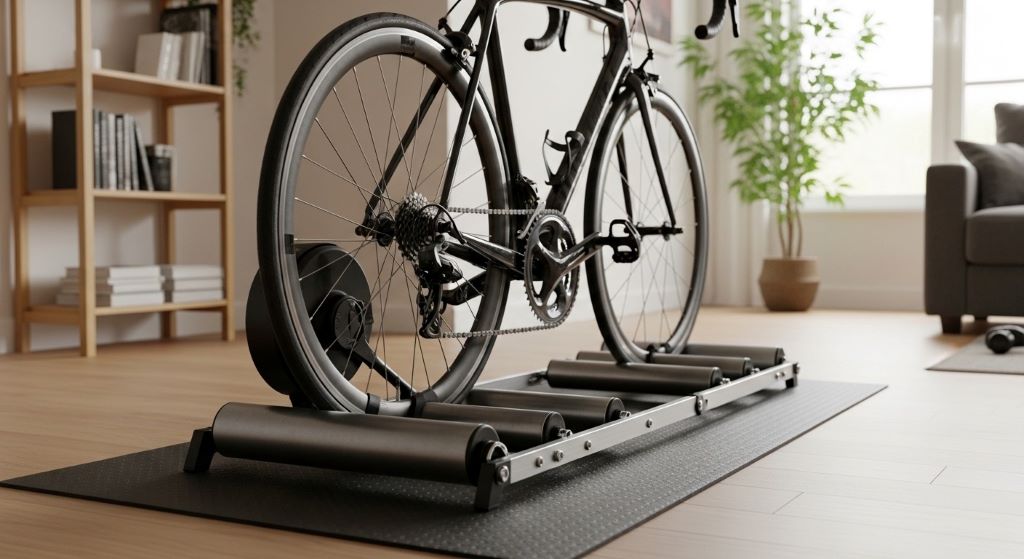
Traditional three-drum rollers represent the classic design. Your front wheel sits on one drum while your rear wheel spans two drums. These create moderate noise levels depending on construction quality. The design is simple and effective, though it requires more balance skill than other options.
Fork-mounted rollers eliminate front wheel noise entirely by securing your front fork to a stationary mount. Only your rear wheel spins on the drums. This configuration typically runs quieter than traditional rollers because you’ve eliminated half the wheel-drum contact points. However, you lose some of the balance training benefits.
Resistance rollers incorporate ways to make pedaling harder, simulating climbing or increasing workout intensity. These add complexity and potentially more noise. Magnetic resistance tends to be quieter than fan-based systems. If you need variable resistance, research the specific mechanism carefully.
Smart rollers connect to training apps and can automatically adjust resistance. These sophisticated systems often include better bearings and construction to justify their higher prices. Many prioritize quiet operation as a selling point, making them worth considering despite the investment.
Evaluating Noise Specifications and Reviews
Manufacturers provide specifications, but understanding what these numbers mean in practical terms requires some knowledge. Moreover, real-world reviews often reveal information not captured in spec sheets.
Decibel ratings give you a baseline for comparison. However, context matters significantly. A rating of 60 decibels might seem acceptable, but you need to know at what speed and power output that measurement was taken. Normal conversation registers around 60 decibels, while a whisper is approximately 30 decibels.
Look for specifications that include multiple measurements at different speeds. A roller might be quiet at 15 miles per hour but significantly louder at 25 miles per hour. Consider your typical training intensity when evaluating these numbers.
User reviews provide invaluable real-world feedback. Search specifically for reviews from apartment dwellers. These users share your concerns and often mention whether neighbors complained. Reading multiple reviews helps you identify patterns and separate exceptional experiences from typical ones.
Video reviews let you hear the actual noise levels. Watch several videos of the same model to get a consistent impression. Additionally, pay attention to what kind of bike and tire the reviewer uses, as these factors affect the sound you’ll hear.
The Impact of Tire Selection
Your tire choice dramatically influences noise levels. The wrong tire can make even the quietest rollers sound like a jet engine. Conversely, the right tire significantly reduces sound output.
Smooth trainer-specific tires run much quieter than regular road tires with tread patterns. The uniform surface creates consistent contact with the drums, eliminating the rhythmic whooshing sound that treaded tires produce. These tires also last longer on rollers and won’t leave black residue on your drums.
Tire pressure affects both noise and performance. Higher pressure generally reduces rolling resistance but can increase noise slightly. Lower pressure creates more contact patch area, potentially dampening some sound but wearing the tire faster. Experiment to find the sweet spot for your specific setup.
Tire width plays a role as well. Wider tires distribute pressure across a larger area, which can reduce noise. However, extremely wide tires might not fit properly on standard roller drums. Check the roller specifications for recommended tire widths.
Some cyclists use their regular road tires indoors, switching bikes or wheels when they want to ride outside. While convenient, this approach produces more noise. If neighbor relations are your priority, investing in a dedicated trainer tire makes sense.
Floor Protection and Vibration Dampening
Protecting your floor and reducing vibration transmission to neighboring units requires additional equipment beyond just quiet rollers. These accessories make a substantial difference in overall noise experienced by others in your building.
Rubber mats designed for exercise equipment provide a foundation for your roller setup. These mats absorb vibrations and prevent the rollers from sliding during intense efforts. Thicker mats generally perform better, though they cost more and take up more storage space.
Interlocking foam tiles offer excellent vibration dampening at a reasonable price. You can configure them to fit your space and easily expand or reconfigure the covered area. They also protect flooring from sweat damage and make the riding area more comfortable for post-workout stretching.
Specialized platforms designed for trainers and rollers provide maximum noise reduction. These platforms incorporate multiple layers of different materials to absorb vibrations and isolate the equipment from the floor. While expensive, they represent the best solution for seriously concerned apartment dwellers.
Consider placing additional padding under the mat if you live above ground-floor neighbors. Carpet remnants or yoga mats can provide extra sound insulation. Every layer between your equipment and the building structure helps reduce transmission.
Room Selection and Timing Considerations
Where and when you ride matters almost as much as what equipment you use. Strategic choices about location and schedule can prevent neighbor conflicts even with moderately noisy equipment.
Ground floor apartments offer obvious advantages. You have no downstairs neighbors to disturb, eliminating one major concern. However, you still need to consider adjacent units and maintain reasonable noise levels.
Rooms with carpet absorb more sound than those with hard floors. If you have multiple rooms suitable for riding, choose the carpeted one. Additionally, interior rooms typically have fewer shared walls than corner rooms, reducing the number of neighbors who might hear you.
External walls and rooms away from bedrooms minimize the impact on neighbors. Even if you share walls, training in a room adjacent to your neighbor’s living room or kitchen creates less disturbance than riding next to their bedroom.
Timing your rides thoughtfully demonstrates consideration for others. Early morning and late evening sessions are more likely to annoy neighbors. Mid-morning, afternoon, or early evening times typically work better. However, building occupancy patterns vary, so observe when your neighbors seem most active.
Communicate with adjacent and nearby neighbors. Let them know you plan to do indoor cycling and ask if certain times would be problematic. Most people appreciate the courtesy and are more tolerant when they know what to expect.
Testing Before You Buy
Whenever possible, experience rollers before making a purchase. This hands-on evaluation helps you assess noise levels and overall suitability more accurately than any review or specification.
Local bike shops sometimes have floor models you can test. Even if they don’t allow extended test rides, running your bike on display rollers for a few minutes gives you a sense of the noise produced. Bring your own bike to get the most accurate impression.
Some shops offer rental programs or trial periods. These arrangements let you test apartment-friendly rollers at home, in your actual riding environment. This represents the ideal testing scenario because you can evaluate noise in your specific space.
Friends or club members might own different roller models. Borrowing equipment or visiting their homes to try their setups provides valuable comparison opportunities. Cyclists are generally happy to discuss their equipment and share experiences.
Return policies matter significantly for online purchases. Choose retailers with generous return windows and reasonable restocking fees. Document the noise levels when you first set up the rollers so you can make an informed decision within the return period.
Budget Considerations and Value Assessment
Quiet rollers cost more than basic models. However, the price difference often reflects quality that extends beyond just noise reduction. Understanding what you’re paying for helps you determine if the investment makes sense.
Entry-level rollers start around 200 to 300 dollars. These basic models usually produce moderate noise levels. They’re functional but may not meet strict quiet requirements for apartment living. Additionally, cheaper bearings and construction quality might lead to increased noise as components wear.
Mid-range options between 400 and 700 dollars typically incorporate better materials and design features that reduce noise. This price point often represents the sweet spot for apartment dwellers who want reliable, reasonably quiet performance without breaking the bank.
Premium rollers exceeding 800 dollars offer the quietest operation, best construction, and longest lifespan. Smart connectivity and advanced features justify some of this cost, though you’re also paying for refined engineering that minimizes noise and vibration.
Calculate the cost per use over expected lifespan. A 600-dollar roller used three times weekly for five years costs less than three dollars per ride. This perspective makes higher-quality equipment seem more reasonable, especially considering the peace of mind regarding neighbor relations.
Maintenance for Continued Quiet Operation
Even the quietest low noise indoor trainer becomes noisy without proper maintenance. Regular care keeps your equipment running smoothly and maintains the low noise levels you purchased it for.
Clean the drums regularly to remove rubber buildup from your tire. This residue creates uneven surfaces that increase noise and affect performance. Isopropyl alcohol and a clean cloth work well for this task. Clean after every several rides to prevent buildup.
Lubricate bearings according to manufacturer recommendations. Some sealed bearings never need lubrication, while others benefit from occasional attention. Over-lubrication can attract dirt, while under-lubrication causes wear and noise. Follow the specific guidance for your model.
Check frame connections periodically. Loose bolts allow parts to vibrate and rattle, creating unnecessary noise. Tighten any loose fasteners you find during inspections. However, avoid overtightening, which can damage threads or deform components.
Inspect drums for wear or damage. Dents, gouges, or uneven wear create noise and affect riding quality. While drums are durable, accidents happen. Catching damage early prevents it from worsening and lets you address issues before they become serious problems.
Store your rollers properly when not in use. Dust and moisture can affect bearings and other components. If you fold your rollers for storage, ensure they’re dry first. Consider covering them with a sheet or storing them in a closet to protect against environmental factors.
Alternative Solutions for Extremely Noise-Sensitive Situations
Sometimes, even the quietest apartment-friendly rollers might not be appropriate for your specific situation. Several alternatives let you maintain your cycling fitness without indoor riding.
Stationary trainers that hold your bike completely off the ground eliminate floor vibration transmission. Direct-drive trainers, where you remove your rear wheel entirely, run remarkably quietly. These cost more than rollers but might be worth considering if noise is your primary concern.
Gym memberships with cycling facilities let you train without worrying about neighbors. Many gyms offer bike rooms or spin classes. This option adds ongoing costs but removes equipment concerns from your apartment entirely.
Outdoor riding year-round works in many climates. Investing in appropriate clothing and lights extends your outdoor season significantly. While weather sometimes prevents riding, it might be preferable to constant worry about noise.
Early morning or late evening outdoor rides, before or after work, maintain your training schedule without apartment noise concerns. Sunrise and sunset rides offer their own rewards beyond just solving the noise problem.
Combining methods provides the most flexibility. Perhaps you ride outdoors when weather permits and use quiet rollers during storms or extremely cold weather. This hybrid approach minimizes indoor riding frequency while maintaining your fitness program.
Conclusion
Choosing quiet bike rollers for apartment use requires balancing multiple factors. The equipment’s inherent noise characteristics form the foundation, but accessories like mats and thoughtful tire selection significantly impact the final result. Understanding where noise comes from and how different features affect sound production helps you make an informed choice.
Remember that apartment-friendly rollers exist at various price points. You don’t necessarily need the most expensive model, though investing in quality equipment pays dividends through years of reliable, quiet operation. Additionally, proper maintenance keeps your rollers running quietly long after purchase.
Consider your specific situation when making decisions. Ground-floor apartments have different requirements than upper-floor units. Your training intensity, schedule flexibility, and willingness to communicate with neighbors all influence the best solution for your needs.
Ultimately, modern roller technology makes it entirely possible to train seriously indoors without disturbing others. By carefully selecting equipment, using appropriate accessories, and maintaining your gear properly, you can enjoy productive cycling workouts while maintaining positive relationships with your neighbors.
Frequently Asked Questions
Are rollers quieter than wheel-on trainers for apartments?
Rollers can be quieter than some trainers, but it depends on the specific models. High-quality rollers with parabolic drums and good bearings produce less noise than budget trainers. However, direct-drive trainers that remove your rear wheel entirely typically offer the quietest operation overall. For apartment use, focus on decibel ratings and user reviews rather than choosing based on equipment type alone.
Can I use regular road tires on quiet rollers?
You can use regular tires, but they’ll produce significantly more noise than smooth trainer-specific tires. Treaded road tires create a rhythmic whooshing sound as the tread pattern contacts the drums. If you’re serious about keeping noise levels low, investing in a dedicated trainer tire is worthwhile. These tires also last longer on rollers and won’t leave black marks on your drums.
How much difference does a floor mat really make?
Floor mats make a substantial difference, particularly for downstairs neighbors. A quality mat can reduce vibration transmission by 50 percent or more compared to placing rollers directly on hard floors. Thicker mats perform better than thin ones. For maximum noise reduction, use a specialized trainer mat rather than a generic exercise mat, as trainer mats are designed specifically to dampen cycling-related vibrations.
Will my neighbors definitely complain about roller noise?
Not necessarily. Factors like building construction, your floor position, riding times, and your neighbors’ tolerance levels all play roles. Modern construction with proper sound insulation handles moderate noise better than older buildings. Many cyclists use rollers in apartments without issues by choosing quiet equipment, using proper mats, and riding at reasonable hours. Communication with neighbors helps prevent problems before they start.
Should I choose smart rollers or traditional ones for apartment use?
Smart rollers often incorporate better construction and materials that reduce noise, though they cost significantly more. If you want app connectivity and structured workouts, the investment might be worthwhile for multiple reasons. However, if you’re purely focused on quiet operation, traditional high-quality rollers with parabolic drums and sealed bearings can be just as quiet at a lower price point. Your training goals should guide this decision.
Related Topics:
Can You Replace Seat on Exercise Bike?
What Are Good Cheap Bike Brands?